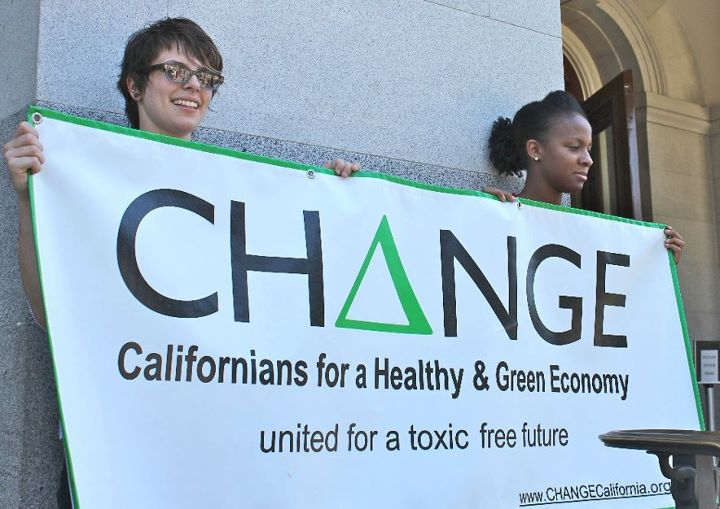
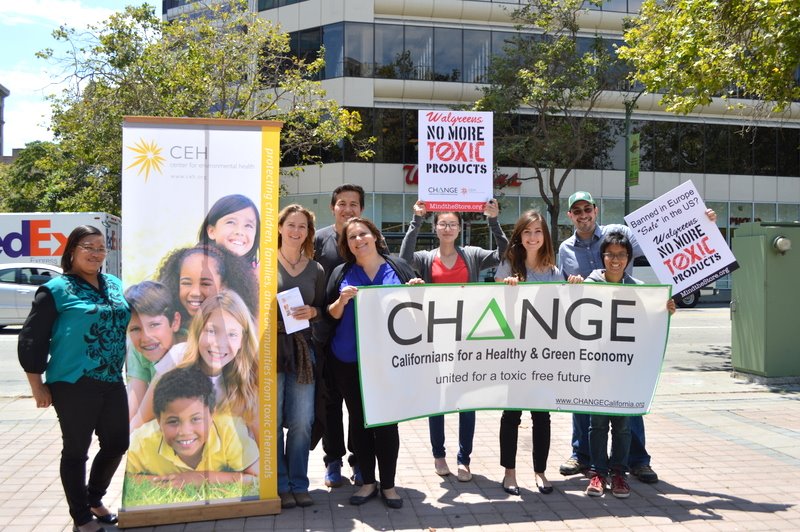





CHANGE (Californians for a Healthy & Green Economy)
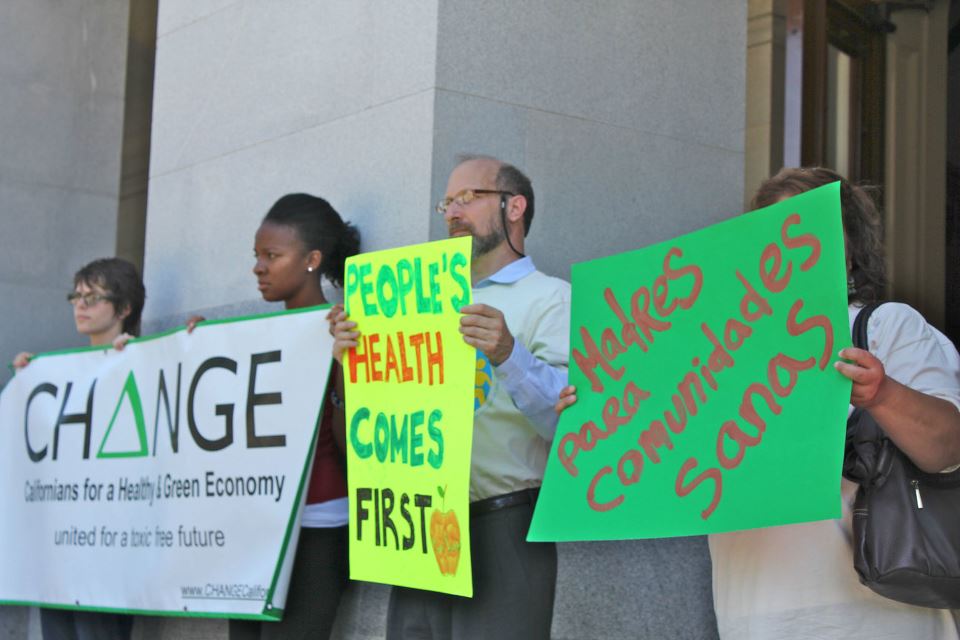
A growing coalition of environmental health, policy, labor, environmental justice, interfaith, and other organizations who are working to create a better system for regulating toxic chemicals in California.Community voices, especially low-income and communities of color, are vital to the process of determining how chemicals should be regulated in California.
Workers, low income and communities of color are disproportionately-impacted by the health effects of chemicals in the environment and in products. We recognize that these efforts will only be worthwhile if community voices are at the table helping craft solutions to the problem. We are in the process of bringing more communities of color to participate in the process and invite you to join us.
Listen Live to the US Senate Hearing on Toxic Chemicals on February 4
February 4, the Senate Subcommittee on Superfund, Toxics and Environmental Health is holding a hearing to examine the current science on public exposure to toxic chemicals. The federal law governing toxic chemical production and use, the Toxic Substances Control Act, is due to be updated with new legislation by Subcommittee Chair, Senator Frank Lautenberg (D-NJ) in early 2010.
What will they say? Are the Feds going to represent California's interest in protecting health and the environment from toxic chemicals?
Find out by listening live to the Senate Hearing Feb 4, 10:00 am (EST) (7:00 am PST) thanks to Safer Chemicals, Healthy Families, Pacifica Radio Network and Free Speech Radio News.
Then come back to this space and tell us what you thought.
Read more...Reducing chemical exposure could save California $700 million
State and Federal reform of toxics law would make Californians healthier, wealthier
OAKLAND–Cash-strapped California could save at least $700 million in health care costs if more stringent state and federal chemical policy helped reduce Californians’ exposure to toxic chemicals.
A new analysis released today,“The Health Case for Reforming the Toxic Substances Control Act,” finds that the state has the opportunity to prevent rising rates of chronic disease and therefore reduce health care costs. Evidence is strong and growing that chemical exposures contribute significantly to the rise in many chronic diseases, according to this new report synthesizing peer-reviewed science and economic analyses.
Read more...California state Assembly fails to pass BPA ban
By Sarah E. Brown
SACRAMENTO - Sept. 11, 2009. The California state Assembly failed to pass SB 797, a bill which would have banned the toxic chemical bisphenol A (BPA) from use in children's sippy cups, infant formula and other food and drink products designed for children aged three and younger.
More than 200 scientific studies have linked BPA, a synthetic estrogen used in many hard plastics, to reproductive disorders, prostate and breast cancer, autism, birth defects, infertility in men, early puberty in girls and other serious health risks.
Read more...Upcoming workshops and learning opportunities
See below for information about upcoming workshops and learning opportunities related to green chemistry and environmental health in the San Francisco Bay Area:
Free Webinar: What Does Chemical Contamination Cost Health Care?
New report details how to reduce disease and save billions by overhauling the U.S. chemical management system
January 28, 1:00 pm Eastern
A new report released by Safer Chemicals, Healthy Families outlines the role of chemical contaminants in cancer, asthma, reproductive disorders, and other conditions. Learn about the report from a co-author and other leading researchers. Estimates of the proportion of the disease burden that can be attributed to toxic chemical exposures vary, ranging from 1 percent of all disease to 5 percent of childhood cancer, 10 percent of diabetes, Parkinson’s disease, and neurodevelopmental deficits, and 30 percent of childhood asthma. A conservative estimate puts the health care cost savings attributable to a decline in the incidence of chronic disease due to reductions in chemical exposures at $5 billion per year. The report illustrates the opportunity to prevent disease and reduce health care expenditures by overhauling the chemical management system in the United States.
Speakers:
Charlotte Brody, RN, National Field Director, Safer Chemicals Healthy Families
Richard Clapp, DSc, MPH, Professor of Environmental Health, Boston University School of Public Health
Ted Schettler, MD, MPH, Science Director of the Science and Environmental Health Network
To register for the webinar, please go to: http://www.practicegreenhealth.org/tools/webinars/calendar/details/547.
Click here to sign up to stay connected to events and issues related to CHANGE.
AMA advocates for improved U.S. chemical policy
By Sarah E. Brown
During their June 2008 Annual Meeting, the American Medical Association House of Delegates resolved to advocate for improved chemical policy and environmental health practices in the United States.
The AMA, founded in 1847 and incorporated in 1897, is the largest association of physicians and medical students in the United States.
The AMA publishes the Journal of the American Medical Association (JAMA), which has the largest circulation of any weekly medical journal in the world.
Read more...
Donate to CHANGE